Complex B2B hotel operations tool — Power Grid,
from discovery to shipped product.

2020 — 2022 • Product Designer

My Role

Owned the complete design process — research, prototyping, testing, and implementation

Achievement

Reduction in task execution time by approximately 50% for a single update,
up to 80%
for mass updates.

Problem

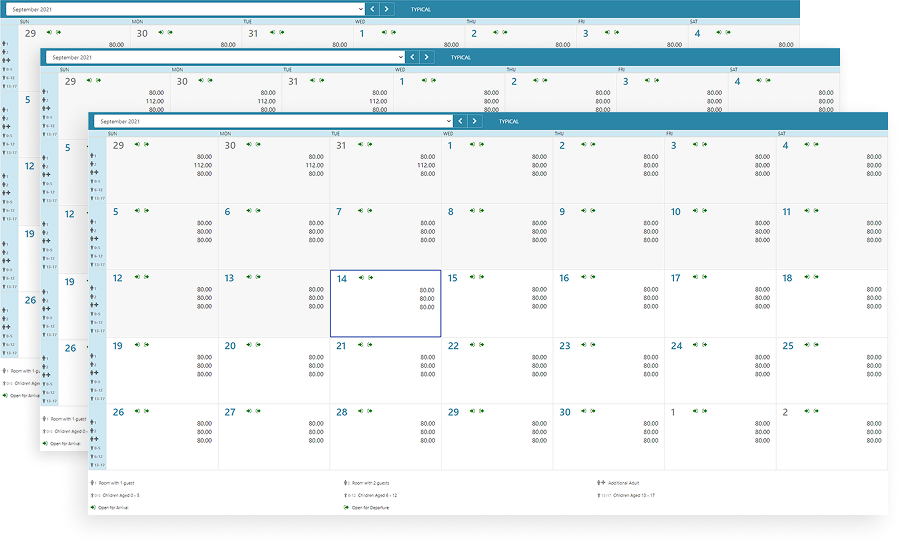
Users could not view room availability and prices in one place, which led to a cumbersome workflow. To perform these actions, users had to open each room or price in a separate window
in calendar mode.
This workflow led to frequent pricing errors and increased support burden.
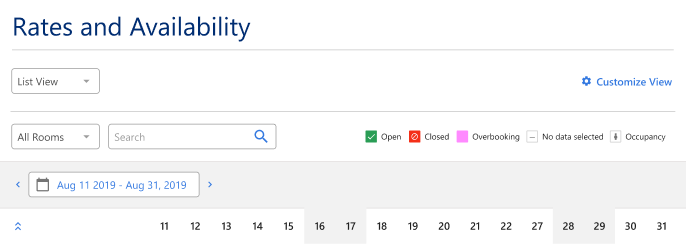
Old calendar view

Goals

  • Enable efficient hotel operations to retain customers and reduce support costs
  • Reduce the number of steps/time to make changes.
  • Provide a complete overview of hotel status on one page for improved decision-making.

Initial stage

I researched competing tools (Booking.com Extranet, Expedia Partner Central) and analyzed user feedback and support tickets to identify pain points.
Early technical constraint: The dev team lead and I had to address browser performance issues when displaying large datasets (even 3-4 rooms with 5 rates each could overload the interface).
I focused on two primary user personas:
  • Small property owners — use our system daily to update pricing and availability.
  • Reduce the number of steps/time to make changes.
  • Enterprise hotel chain managers — update seasonally or in bulk.

Preparing for a long journey

The project started with the support of the company's UX director, and then I took the lead on the design. I collaborated closely with programmers, the support team, and individual clients.
In the early stages, I conducted thorough research on similar or competing instruments and analyzed feedback from our users on our current tools.
From the start, we addressed major technical limitations, particularly the challenge of presenting a large amount of data on a single screen.
For example, an average hotel client with 4-5 rooms, each with about 5 rate categories across various occupancies, results in a substantial number of cells when displaying two weeks' data.

Solution

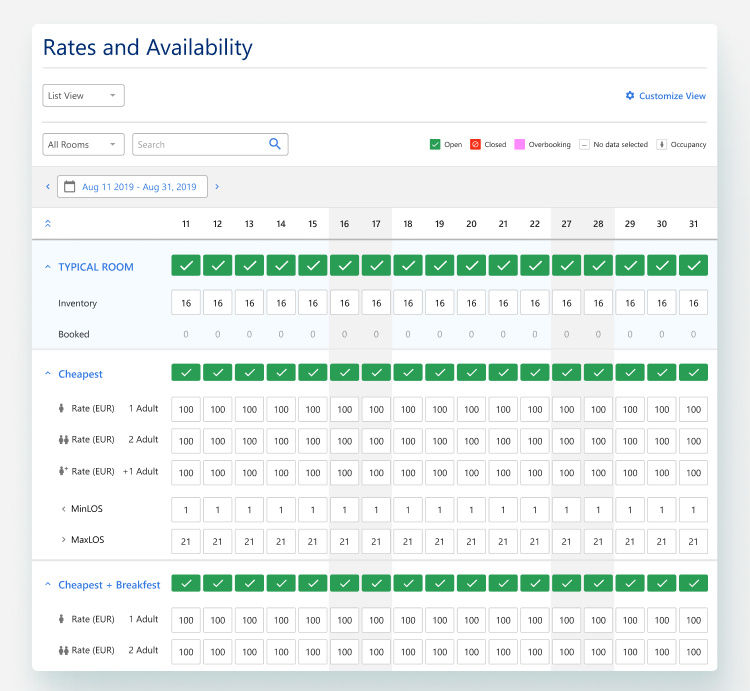
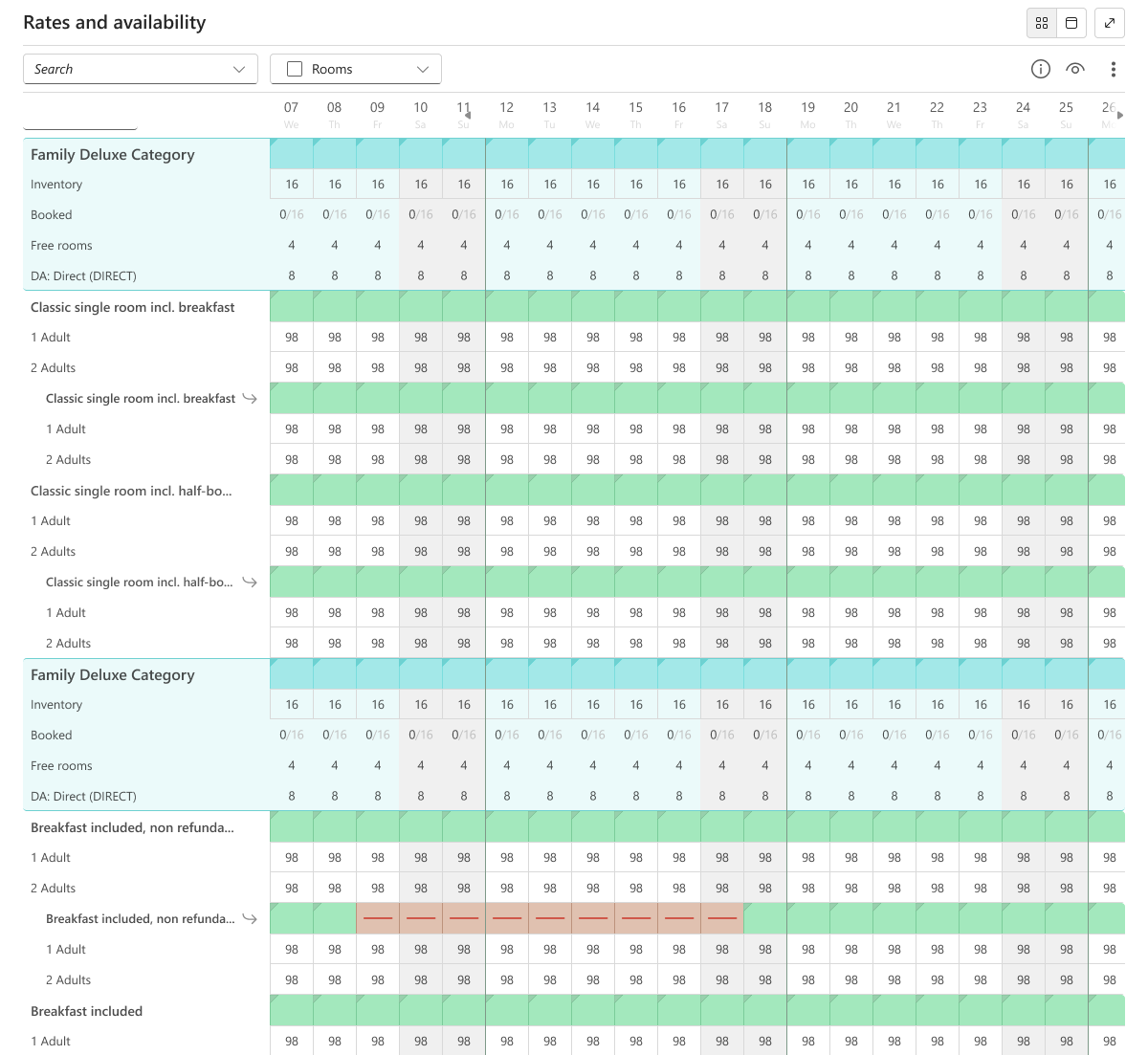
Working with the PM, we chose a spreadsheet-like table format because it allowed users to scan multiple rooms and rates simultaneously while maintaining the flexibility to edit inline —
similar
to tools users already trusted like Excel and competitor extranet interfaces.

Key Features:

  • Customizable row display
  • Calendar/grid view toggle
  • Inline bulk editing
  • Accessibility-first iconography
  • Real-time search and filtering

Design Process

After implementing the first version, we conducted user interviews with customers, uncovering issues with the initial hypothesis:
  • Laptop screens' limited space caused dissatisfaction among users, who preferred
    the calendar display with a longer time frame.
  • Users also struggled to differentiate between room and price lines.
  • Information overload proved burdensome.

Information overload

User testing revealed overwhelming information density in the first iterations.
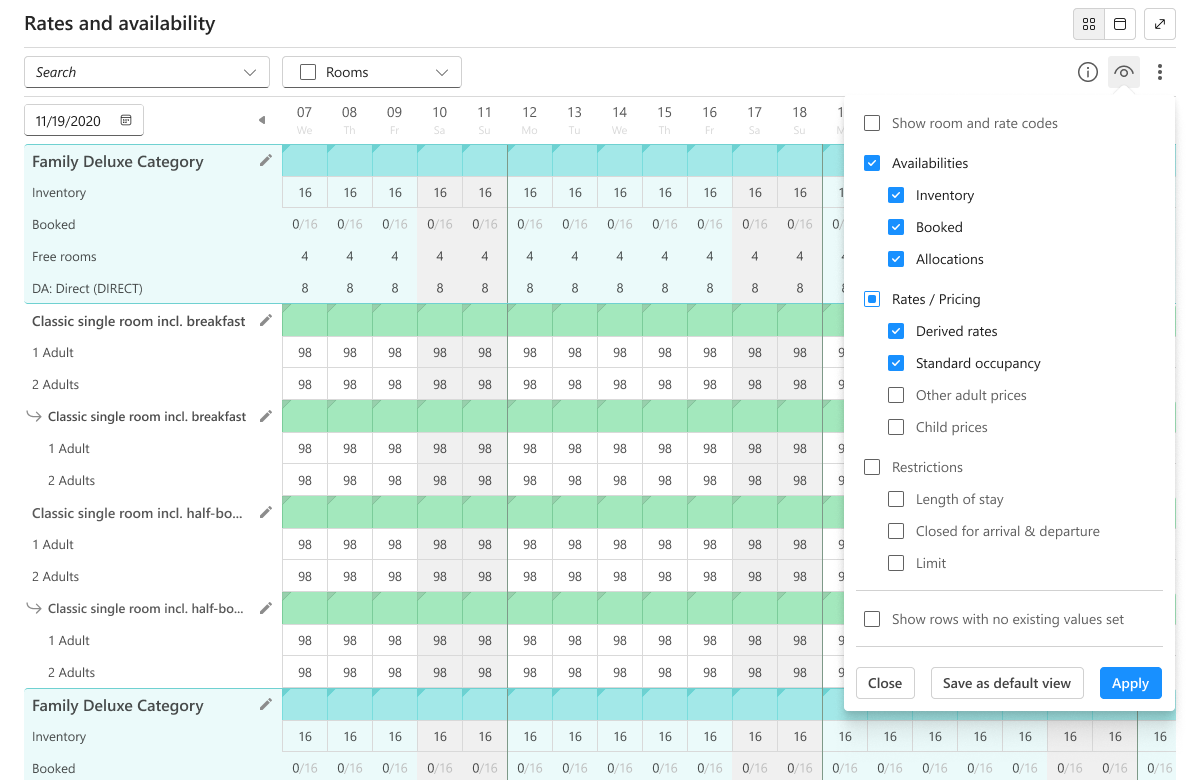
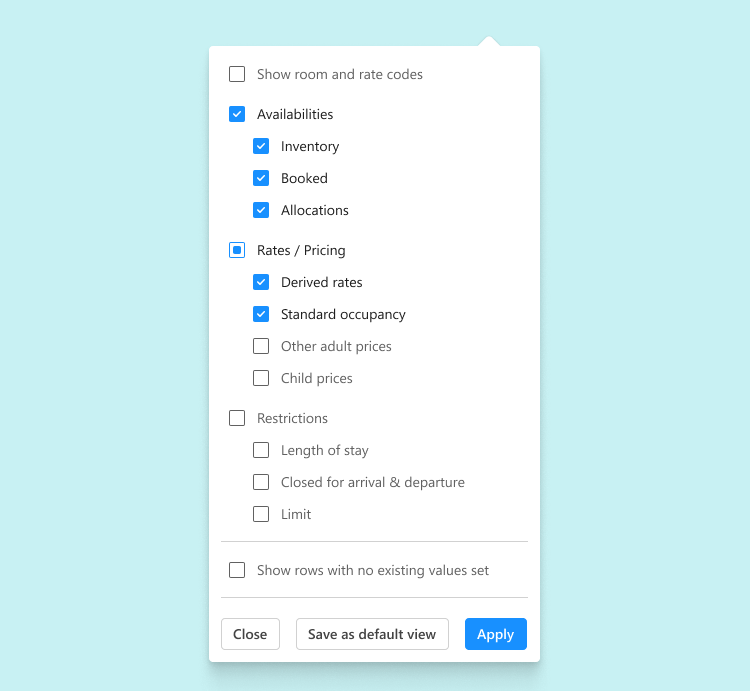
I designed a customization feature allowing users
to show/hide rows based on their workflow needs.
The toolbar evolved across multiple iterations to balance feature additions with screen space constraints.
I designed a customization feature allowing users
to show/hide rows based on their workflow needs.
Key challenge: adding search, filters, view toggles, and accessibility options without cluttering
the interface.
One of the first versions - too much inefficiently used space in conditions when almost every pixel is important.
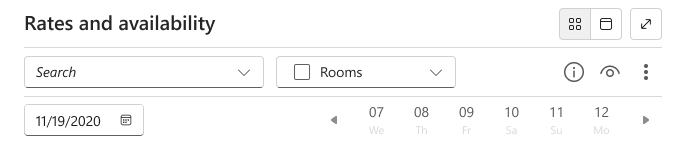
The second to last version. Elements rearranged, search combined with room filtering.
Final version (at the moment).
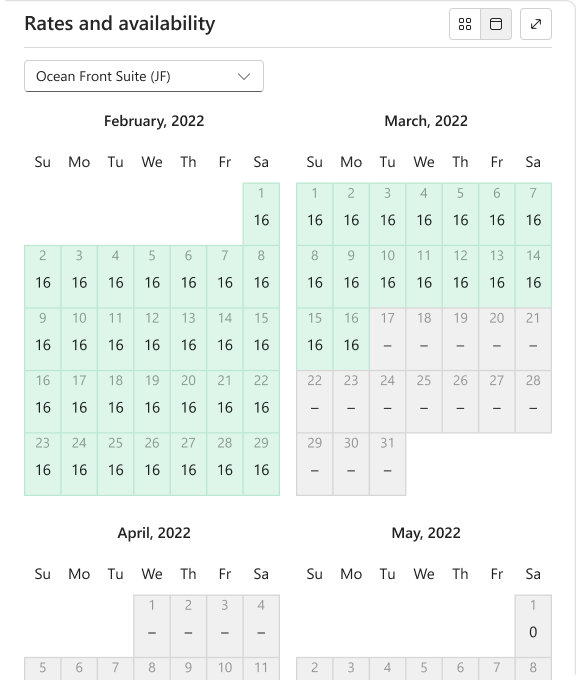
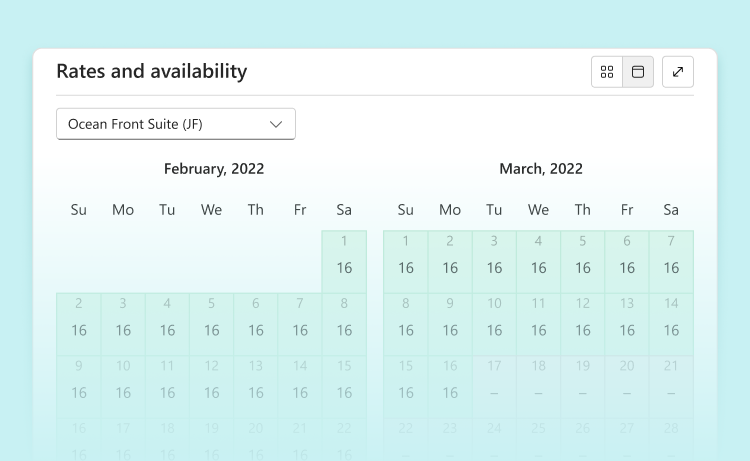
I added a calendar view toggle based on user requests.
However, small property owners — who complained most about the table view — rarely used this feature. This insight validated our focus on the customizable grid as the primary interface.
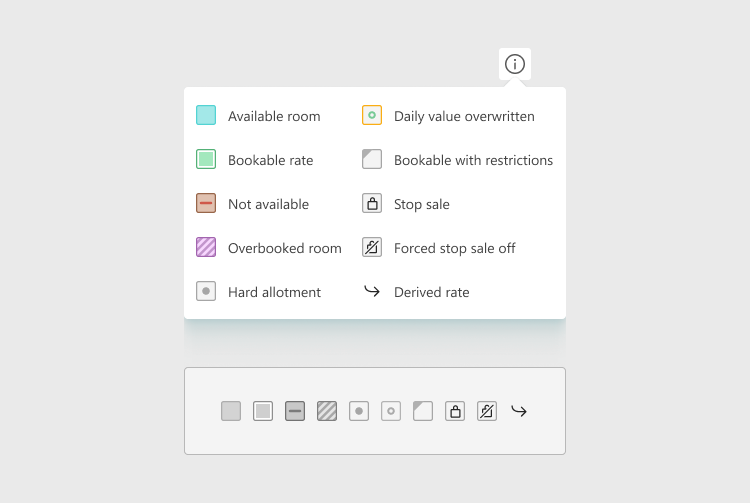
To ensure accessibility for colorblind users,
I redesigned the status iconography to communicate room states through shape and pattern,
not color alone.

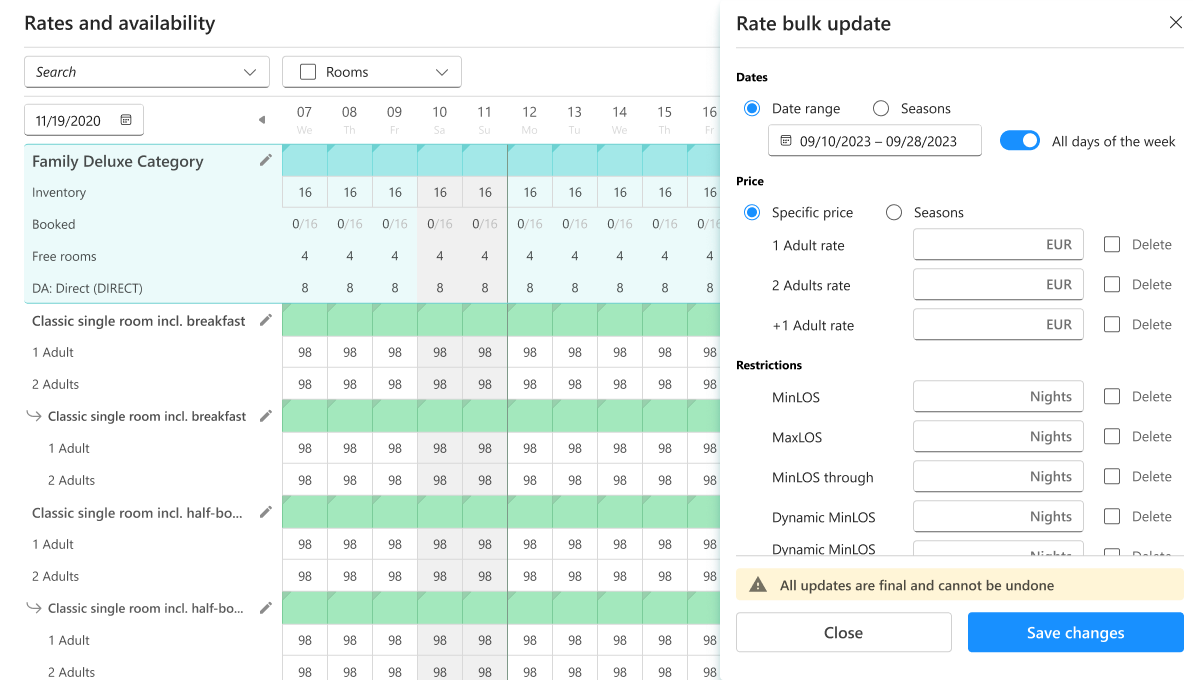
Bulk update

Our "killer feature" — the ability to make bulk updates for rooms and rates, and immediately save without closing/overloading the window proceed
to the bulk update of another room/rate

Impact

  • 50-80% Faster Operations
    Single updates completed in half the time; bulk operations up to 80% faster.
The more rates updated simultaneously, the greater the efficiency gains.
  • Single-Screen Clarity
    Consolidated view of all rooms, rates, and availability eliminated window-switching
and enabled informed decision-making at a glance.
  • From Resistance to Adoption
    Overcame initial pushback to become the primary pricing management tool,
replacing the legacy calendar-based workflow.

Lessons learned

I learned how important it is to ask questions about scope and outcomes, especially at the right time. Instead of focusing on implementation strategies and release plans, I spent too much time polishing the UI.  Oh, and this project really made me see tables as always being time-consuming and complicated.

Final result

First steps

Having created the first mockups that met the goals, we collected feedback exclusively from the company's internal teams.
After adjusting and implementing the first version, we conducted user interviews with individual customers, identifying problems with the initial hypothesis:
  • Laptop screens' limited space caused dissatisfaction among users, who preferred the calendar display with a longer time frame.
  • Users also struggled to differentiate between room and price lines.
  • Information overload proved burdensome.
One of the first versions that was tested

Evolution of toolbar

The toolbar has gone through several iterations. The main challenge was that the functions were constantly being added, we needed to save as much space as possible and simplify everything for users to understand.

Information overload

We have implemented a customization feature that allows users
to personalize the information displayed according to their preferences.
For example, some users may be interested in receiving information
on room allocation for specific channels such as Booking.com or Expedia, while others may prioritize information on "standard price" or "minimum stay" restrictions.
Users were also given the option to save their preferred view so that they don't have to customize it all the time.

Search & room filter

Real-time search and room filters have further simplified the user experience, although filtering by rate type (regular, derivative, B2B, etc.) was deemed unnecessary based on feedback.

Switch to calendar

The "view calendar" switch allows users to easily view the availability of rooms several months in advance.
Small property owners (who complained the most) should have been satisfied, but in fact they mostly did not use it.

"Expand to full screen"

This button expands the entire table, removing all the elements that user don't need at the moment (header, navigation, etc.) from the screen.

Color Blindnes

Recognizing that users may not rely solely on color to comprehend the state
of a room and/or rate, we revamped the iconography and introduced
a helpful legend.
This thoughtful adjustment ensures that all users, regardless of color perception, can easily understand the information presented.

Room & rate codes / ID

The column containing room/rate names underwent multiple redesigns to enhance usability. Users frequently searched using IDs(room and rate codes), resulting
in a separate ID column.
For users not requiring this additional information (power users and small properties owners) , we implemented
the option to disable the display of the ID column, streamlining their experience.
It is worth noting that the column was designed for a size of 35 characters, since 90+% of all rates names in hotels do not exceed this number

Bulk update

Also, one of the main advantages was the ability to make bulk updates for rooms and rates —o save and immediately, without closing the window, proceed to the bulk update of another room/rate.

Final design

Goals achieved

Number of steps

decreases with each update. Instead of opening a new page for each price, a user can simply click on the next row in the table.

Enhanced Efficiency

The duration needed to update a room has been greatly reduced. Additionally, with each update, the efficiency coefficient experiences exponential growth.

Global Overview

We have introduced a feature that allows users to compare room prices and availability seamlessly on a single screen.
This enhancement provides a holistic view, enabling more informed decision-making by presenting all relevant information in one convenient location.

Relevant Information Only

Users can now filter and display only the information they need at any given moment.

Improved Accessibility

Consideration for individuals with visual impairments has been incorporated.